Washington Writers' Publishing House
|
|
|
|
|
|
|
|
|
|
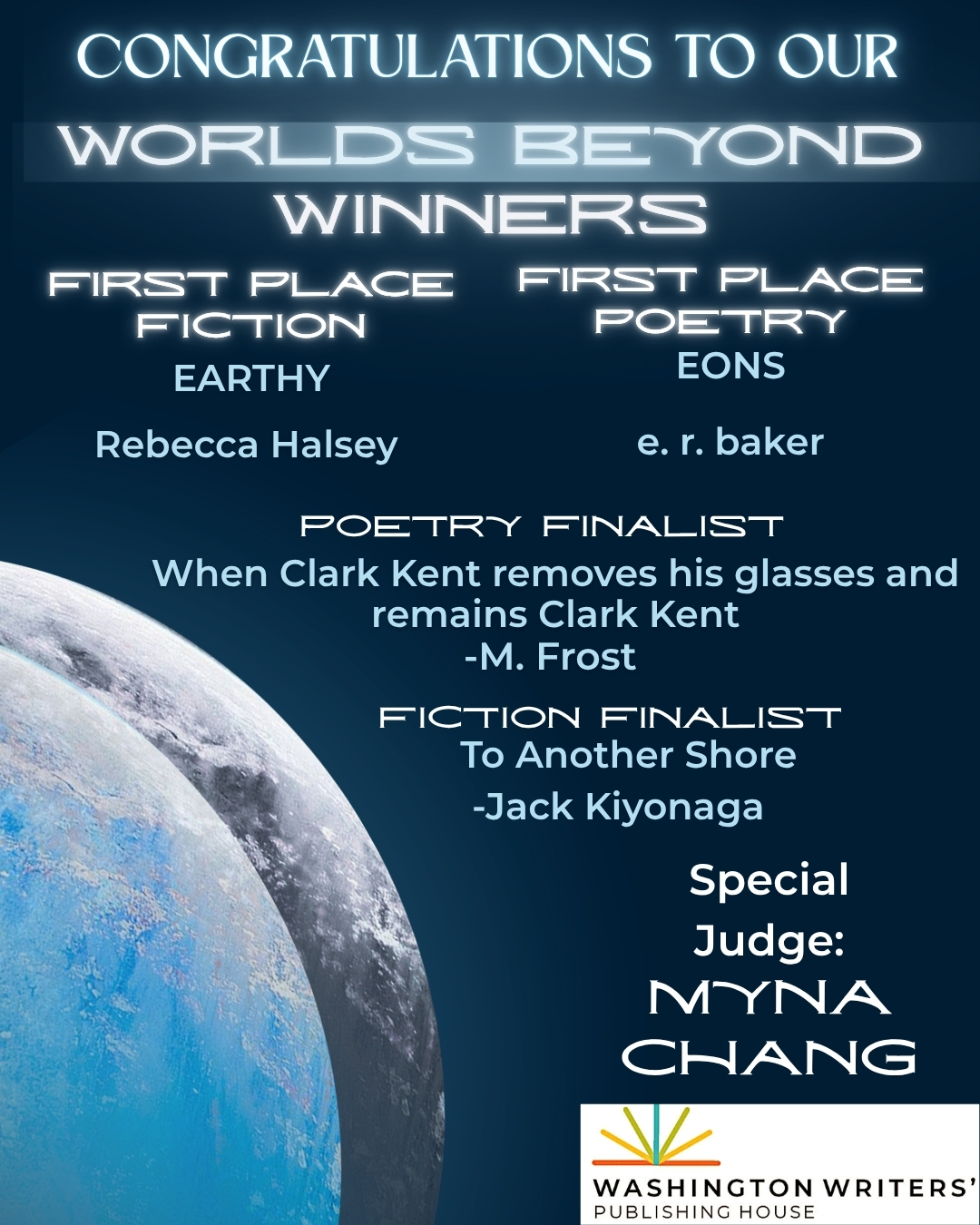
WWPH WRITES 132...goes WORLDS BEYOND in this special issue highlighting the winners of our first-ever literary speculative fiction and poetry contest. A big thank you to our special judge, Myna Chang, and our WWPH Fellow, Nawaal Nackerdien, for their time and effort.
|
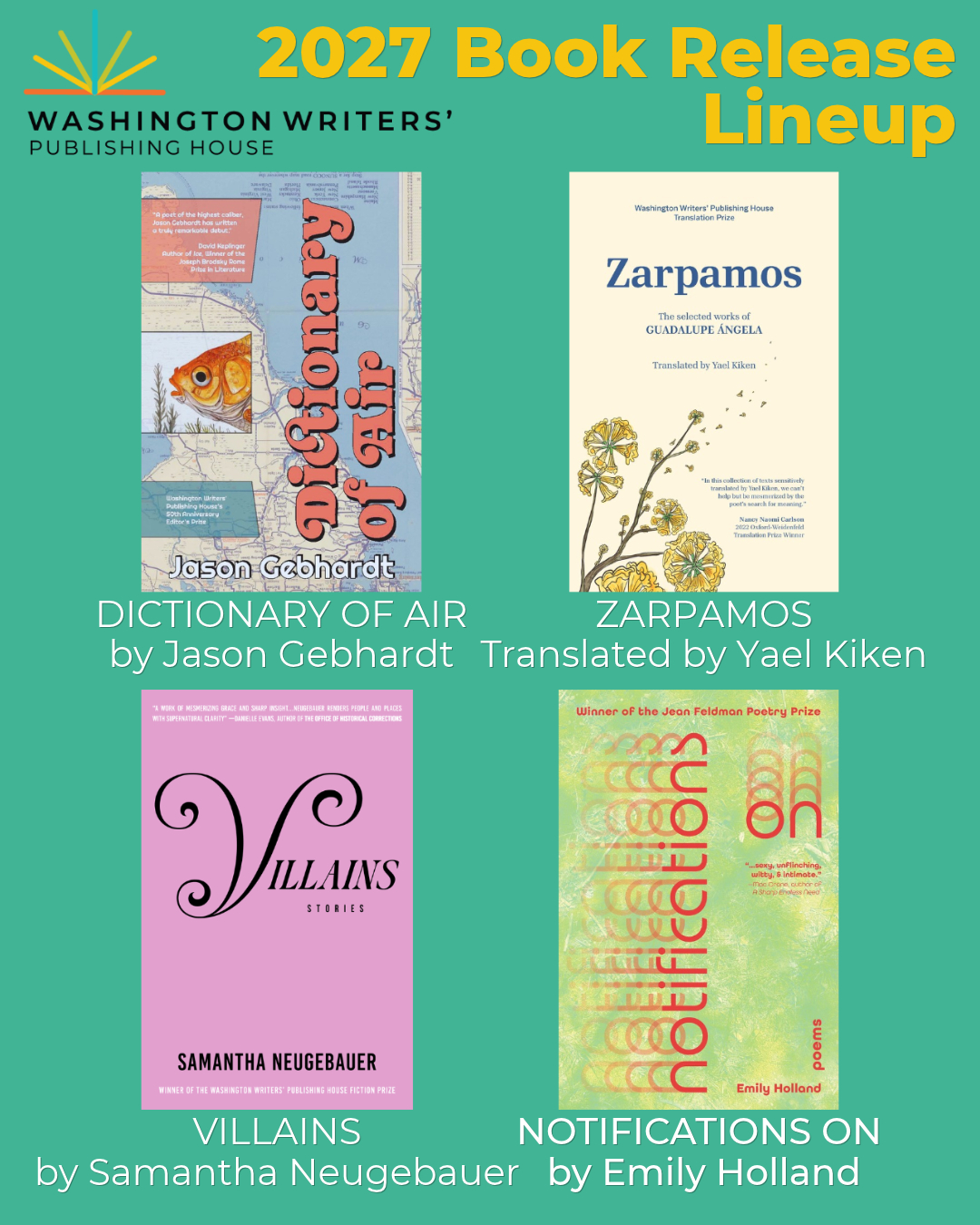
Our Winter 2027 slate of award-winning books from Emily Holland, Jason Gebhardt, Yael Kiken, and Samantha Neugebauer is available for pre-order. Mark your calendars for our big launch at Politics & Prose (Connecticut Avenue store) on Friday, January 29th at 7 pm (you can pre-order your copies here)!
|
News! Your Washington Writers' Publishing House is expanding its slate of books to include short works under 100 pages in length. This major expansion for our cooperative, nonprofit press comes from the deep well of literary creativity we have found across DC, Maryland, and Virginia, and from your support. To launch, we chose books to edit from our finalist list for our recent full-length manuscript prizes. However, in 2027, we will open a contest for a poetry chapbook and two slim prose books (100 pages or less) in addition to our full-length manuscript contest. This first year, we are honored to award Washington Writers' Publishing House's Editor Prizes to these works: Lean Back, Mama (memoir) by Tracy Rothschild Lynch, How to Leave Your Life Behind (short stories) by Edward Daschle, and Minus the Body (poetry) by Christina Daub. Each winner receives $500, editorial and promotional support, and all publication costs. More details here.
|
We are also thrilled to share the winner of our 2028 WWPH Fiction Prize: Michele Simms-Burton of Alexandria, VA, for her historical novel set in Detroit in the 1930s, Call Me Sarah. Her work completes our slate of 2028 full-length works, which also includes our Jean Feldman Poetry Prize winner, Cristi Donoso of Alexandria, VA, for her collection, Certain Species of Want, and our WWPH Nonfiction Prize winner, Stella Dawson of Washington, DC, for Death and Wild Dogs: A Journey Through the Politics of Dying in America. Each winner receives $1,500, editorial and promotional support, and all publication costs. More details here.
|
Read on for out-of-this-world writing...and news of our 2027 WWPH FELLOWSHIP applications and GRACE IN JUSTICE anthology submissions.
|
|
Caroline Bock & Jona Colson
|
|
|

|
|
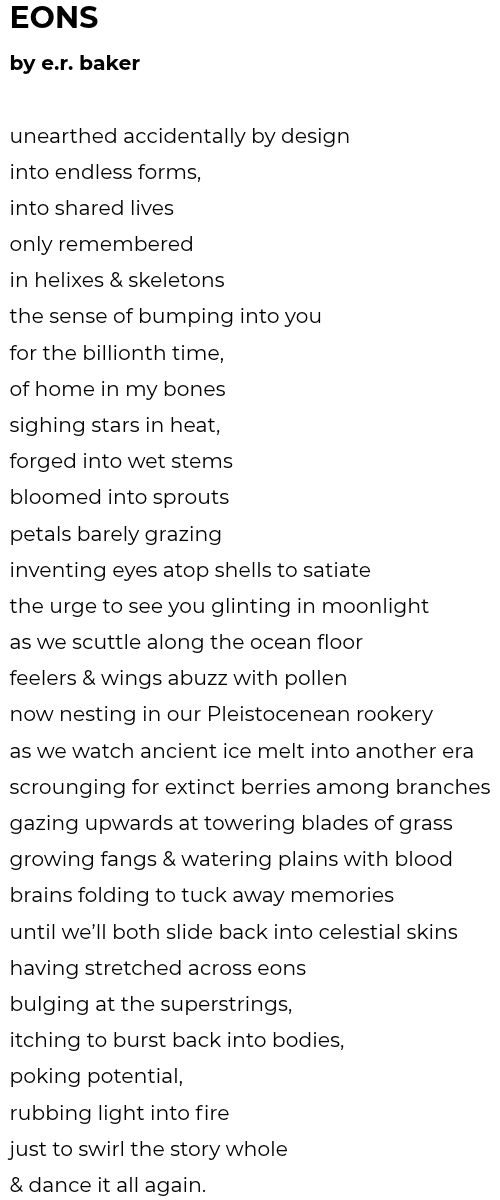
This tale of endless creation is filled with wonder and joy, from its precisely-crafted language (so much story in each carefully chosen word!) to its explosive, hopeful energy. I loved the hint of a fated romance, and the circular nature of the narrative. How lovely to think we might have the chance to “dance it all again." -- Myna Chang
|
|
|
|
|
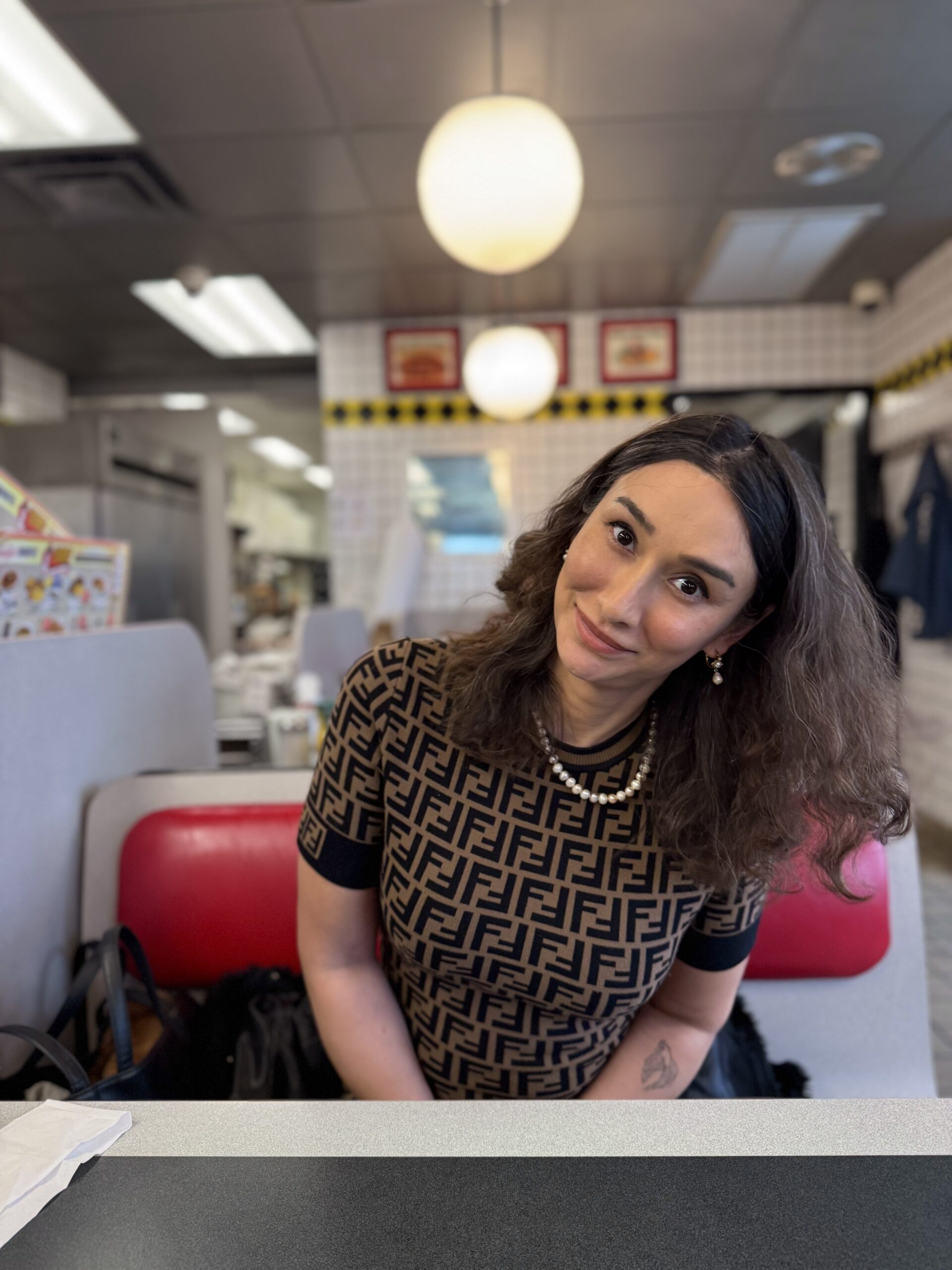
e.r. baker is a Korean American educator & in June 2025 became the first transgender college chancellor in the US. She has been a featured West Hollywood Pride Poet and can be found in print and online including in The Toast, The Chatner, Autostraddle, and in the forthcoming nonfiction anthology Don't Ask, Tell All (UGA Press). She writes and teaches Korean Zen with her wife in Baltimore.
|
|
|
|
|
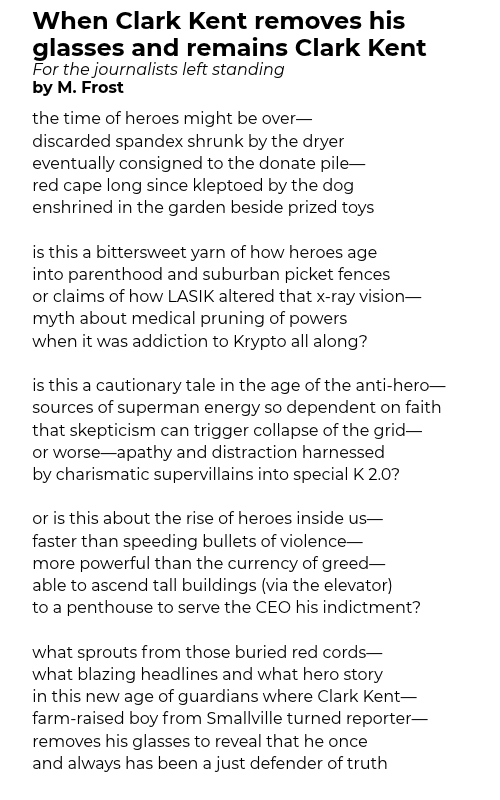
I was drawn in by the playful images of superheroes who may be past their prime, but what hooked me in this poem is the fluid shift to a reality that should be fictional. This is a tribute to the fourth estate, to the real-life Clark Kents who keep trying to do the right thing in an impossible world. The poet’s clever language makes this piece pop off the page. -- Myna Chang
|
|
|
|
|
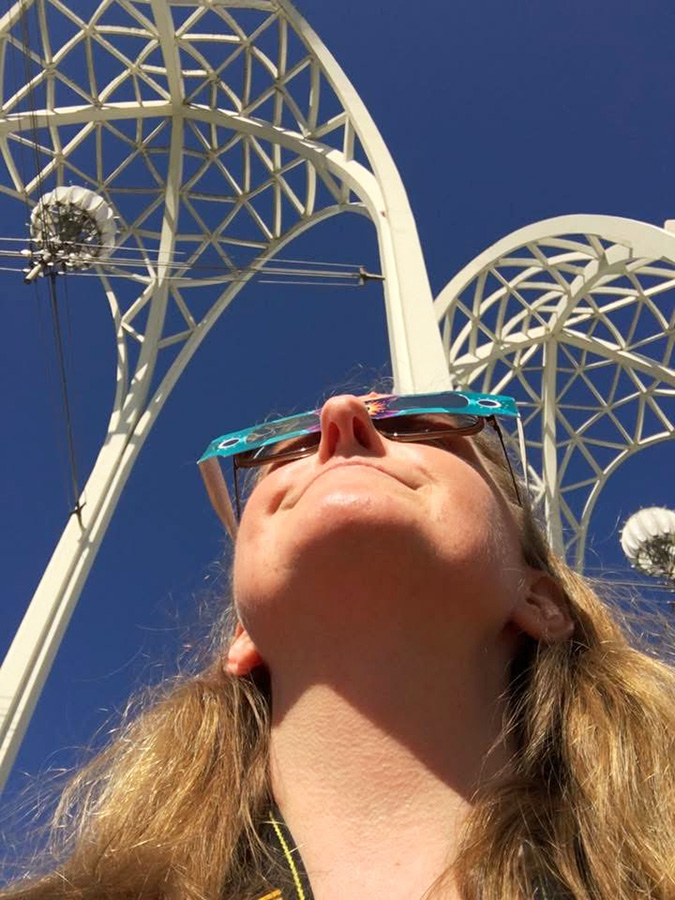
Marylander M. Frost contributes poetry to Star*Line, Strange Horizons, Little Patuxent Review, and many others. Frost's poetry chapbooks include Cow Poetry (Finishing Line Press, 2006), Constellation (CreateSpace, 2013), The Women of Myth (Island of Wak-Wak, 2025), The March (The Arcanist, 2026), and more to come. Explore mfrostwords.com and follow @mfrostwords.bsky.social.
|
|

|
|
The world building in this story blew me away. The tastes and scents of home, of Earth, are brought to life with glorious language. From the bite of a real onion to the “atmosphere” that Earthies bring with them, I was completely grounded in this future. I like that the poignancy is laced with a sense of fun. -- Myna Chang
|
|
|
When Eloise reported for her assignment at the Phobos Short-Transit Refueling Station, the dust-clod manning the quarterdeck assigned her to line cook in the Bay 3 cafeteria.
|
|
“Line cook? I’m a comms tech.” There was no cooking tradition in Eloise’s family, or really, anywhere on the Everton lunar colony where she grew up.
|
|
“Were a comms tech, now a line cook.” Dust-clod handed over the uniform. “Needs of the Station.”
|
|
“What do you need cooks for?” she murmured to herself, shouldering her bag. Why wouldn’t they use powder packets and squeeze tubes? She brought her favorite flavors just in case provisions didn’t carry them here.
|
|
On her first shift, the steam of the kitchen suffocated her despite the roaring vent hoods. Why would they risk a fire by cooking over an actual flame? She stood in a corner, imagining the entire station going up, until the expediter, an Earthie named Astune, came over.
|
|
“Time to learn how to slice an onion.” He tossed her a paper-skinned chunk.
|
|
Eloise couldn’t bring herself to tell him that she’d never seen a real onion, although it was probably obvious. She could recognize the flecks of it in reconstituted stews, but the real thing?
|
|
Astune positioned her grip on the handle of the knife and tucked her fingers along the curve of the—fruit? Was it a fruit?
|
|
“Don’t get so emotionally attached.” He grinned. “It’s just a vegetable.”
|
|
A vegetable that smelled more potent than Eloise could’ve imagined. Is this what her grandmother meant by “earthy”? Cutting, overpowering, prone to attack?
|
|
“First shift crew lunch,” Astune called out, “E, how are the onions coming?”
|
|
She was still only halfway through her bushel, so Astune took up the knife next to her. Each time their elbows brushed, she tried to work faster. He brought his own scent with him, sweeter than the onion, not unlike the cumin they seasoned the meat with.
|
|
She’d noticed this about Earthies—they all brought their own atmosphere. What would it be like to grow up surrounded by these perfumes? Everton just smelled like…the Moon. Newcomers called it “nasal-singe,” how the air-scrubbers seemed to remove an entire layer of existence. She wouldn’t know, having grown up there.
|
|
“I thought robots would be the ones cutting onions.”
|
|
Astune laughed. “First of all, I’m faster than Buster over there.” He nodded to a hulking food processor in the corner. “Second, it can’t make onion rings because he’s been stuck in the ‘dice’ setting since our third tour.”
|
|
“I meant, they could probably do all of this.” Eloise gestured at the synchronized chaos of the kitchen.
|
|
His easy smile dropped. “The thing is they don’t know what anything tastes like.” Astune offered her a piece of onion.
|
|
The crunch was sharp water. If raw had a flavor, it was this peppery but sweet bomb.
|
|
“You won’t get out of onion prep that easily.”
|
|
Or meat tenderizing. Or herb plucking from the greenrooms. Or pantry re-organizing. Astune joined her in that task also. He was unpacking crates of provisions, and the silence started to weigh on her. On the Moon, she knew everyone. Everyone knew everyone. None of the Earthies knew each other until they got on-Station. They were from North-Hemie or Mid-Ocean, Sahara or Politza—places speaking Uniglot, but hours and cultures apart. How did they know what to say to one another if they didn’t know each other’s entire existences?
|
|
Onion juice still coated the roof of Eloise’s mouth. At least it had mellowed, marinated in her own breath, but she should have tasted the other strange Earth dishes on the line.
|
|
“Let’s put these with desserts.” Astune started lining up tubed flavor-paste, the kind Eloise used to squeeze on crackers as a treat.
|
|
“Macha,” she said, “my favorite.” Even the packaging was the same.
|
|
Astune paused. “Mine too. It tastes like home. Earthy, ya know?”
|
|
“I brought some just in case they didn’t have it here,” Astune admitted. “That was before I knew what Phobos—”
|
|
“—was like,” he finished.
|
|
What was Phobos like? She wanted to ask him. “Do you want to share a tube,” she ventured instead, “after we’re done here?”
|
The arrival of second shift interrupted them, but she followed him down the corridor all the same. Just before she had to turn toward her berthing, he turned. “I knew I smelled onions. Come on, I’ll show you around first.”
|
|

|
|
Rebecca Halsey (she/her) is the publisher and editor-in-chief of Flash Fiction Online. She holds an MFA degree in Writing Popular Fiction from Seton Hill University. Her short fiction has most recently appeared in Uncharted, Adventitious, and Small Wonders. More information about her work is available on www.rebeccahalsey.com, and you can connect with her on Bluesky @beckyhalsey.bsky.social. She lives in Maryland with her family, her Olde English Bulldogge, and her large garden, which yielded no less than 45 onions this year.
|
|
|
|
|
Specific details, filtered through a lens of foreboding, immediately set me in this scene. A premonition that things are not quite right grows as the story progresses, so the surreal images and dialogue have an outsized impact
|
|
|
It took a moment for Blaise’s eyes to adjust to the dim restaurant lights. Kyra and a man he didn’t know were sitting at a table in the back.
|
|
Outside, the rain fell lightly, like ash. A lone waiter patrolled the aisles.
|
|
Kyra stood and kissed Blaise on the cheek. She looked great. Her black hair was cut short, falling just over the collar of her Oxford shirt, and she had a focused but calm look in her eyes.
|
|
“This is Emilio,” Kyra said, gesturing to the man next to her dressed like an adjunct professor with a well-trimmed beard.
|
|
“Pleasure,” Emilio said. Blaise tugged on the sleeves of his still-damp suit jacket. The waiter slid three white plates across the table. The ice creaked as he filled the water glasses.
|
|
“Blaise,” Kyra said after the waiter left. “I have to tell you a story.”
|
|
“You always told good stories,” Blaise said. “I used to believe some of them.”
|
|
“Just listen,” Kyra said. “I was late for work. It was dumb, but I crossed against the light. The next thing I knew, I was rolling up a cab windshield. So I screamed and screamed, then everything stopped, and I was sitting on the curb, just watching. A woman was pointing and yelling, but I couldn’t hear her. And then it hit me: I was dead.”
|
|
The waiter showed Emilio the wine bottle and then filled their glasses.
|
|
“Dead girl walking,” Blaise said.
|
|
“It was confusing because nothing seemed different at first. I just went home and ate pasta and watched TV. But at night, I kept hearing footsteps. They were casual, unhurried, like the mail being delivered next door.”
|
|
The waiter served the food: duck with red skin and silky white meat, plum sauce, cold tomato slices with slabs of mozzarella dusted in olive oil and pepper. As Kyra ate, she became gorgeous. Her hair turned raven. Her throat glinted with sweat. Blaise chewed for a moment in rapturous silence.
|
|
“He had come to take me to the other side,” Kyra finally said. “They were his.”
|
|
“I like it,” Blaise said.
|
|
“So,” Emilio said, pouring Blaise more wine, “have you been fortunate in your life?” His voice curled softly.
|
|
“I think so,” Blaise said.
|
|
“Were you loved?” Emilio asked. “Did you love?”
|
|
When Blaise glanced at Kyra, she met his eyes silently.
|
|
“I was loved,” Blaise said. Emilio smiled. His teeth were yellow.
|
|
“How about you?” Blaise asked. “Who are you?”
|
|
“I’m a guide,” Emilio said.
|
|
Emilio cut the skin off the duck. “Closer.”
|
|
Emilio excused himself, stood, and headed to the bathroom. Kyra followed him with her eyes until he was out of sight.
|
|
“Who’s he?” Blaise asked.
|
|
“A new friend,” Kyra said.
|
|
“That’s not very cool, Kyra.”
|
|
“It’s life,” he said. “You move on. You meet people. I get it.”
|
|
“Blaise,” she said. “It’s going to be okay. I swear. It will be okay. You’ll find the way through.”
|
|
Her reaction had started to scare him.
|
|
“What are you talking about?”
|
|
“Why are you here,” said Kyra, starting to cry. “You had so much. You just had to keep going. What happened? Really, what the fuck happened?”
|
|
Blaise opened his mouth but didn’t say anything. His throat ached like a rusty pipe. All at once, like falling back into a dream, he remembered when his phone rang with the news. How surprised he’d been that they had an open casket. That Kyra’s face looked pretty good until you got up close. He remembered reading her texts and letters late into the night, listening to her voicemails. He remembered birthdays without her. In his dreams, she wandered the halls of supermarkets and endless rows of soybean fields.
|
|
Finally, Blaise remembered the temptation to take his hands off the railing. The sting of the wind. The realization that the river was alive, a deity with muddy green eyes.
|
|
Kyra’s eyeliner had started to run.
|
|
“I won’t see you for a while,” she said. “But I’ll see you again. You were good. It’s hard, but you’ll make it. Don’t forget that. You will be saved by your good things.”
|
Blaise sat back in his chair. The food turned to ash in his stomach when he heard the bathroom door close. His footsteps were like rain, and Blaise knew that he had come to take him.
|
|

|
|
Jack Kiyonaga is a writer and journalist living in Washington DC. He writes all kinds of things from long-form investigations to breaking news to fiction. Jack is currently receiving an MFA in Creative Writing from NYU, where he is studying fiction and working on a debut novel.
|
|
|
|
|
|
|
|
WWPH's Winter 2027 slate of award-winning books is now available for pre-order everywhere you buy books. Support WWPH and order your copy through our bookshop.org link here.
|
|
|
|
CONGRATULATIONS TO OUR EDITOR PRIZE HONOREES AND THE NEW 2027 SPRING SLATE! More details here.
|

|
|
|
GRACE & GRAVITY OPEN FOR SUBMISSIONS
|
|
|
GRACE IN JUSTICE… exploring the great divides in our nation today and the hope for a better tomorrow. Guest editor MELANIE S. HATTER. Series Editor: Caroline Bock The distance between survival and security has never felt greater. Across our communities, rising housing costs, stagnant wages, mounting debt, widening inequality, and challenges to our dignity and basic rights as women are …
|
|
|
|
|
|
The WWPH Fellowship provides undergraduates, graduate students, and recent graduates with a keen interest in the literary arts with the opportunity to gain hands-on experience working with the Washington Writers’ Publishing House. WWPH fellows/interns will learn small press publishing from WWPH executive board members and authors while helping advance the press’s mission. Participants will gain invaluable insight into the operations of an …
|
|
|
|
|
|
|
Join us, Jona and Caroline, along with writers Tara Campbell, Therese Doucet, and Mary Ann Larkin, for a VIRTUAL Capital Love reading and creative writing workshop on TUESDAY, October 27 at
|
|
|
|
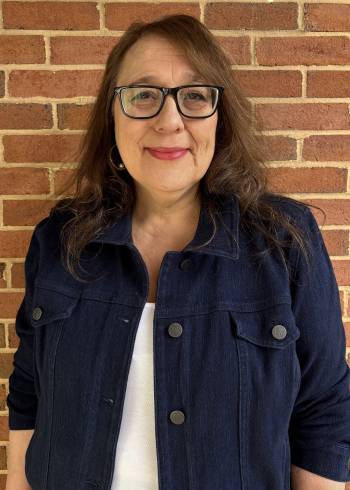
Prose editor, WWPH Writes
|
Author of THE OTHER BEAUTIFUL PEOPLE (Regal House Publishing, 2026). Join the (virtual) book club conversation on The Other Beautiful People with Hannah Grieco (and me!) at the Writer's Center on Sunday, November 15th from 2-3 p. Free! All invited. Sign up here for link.
|
|
|
|
|
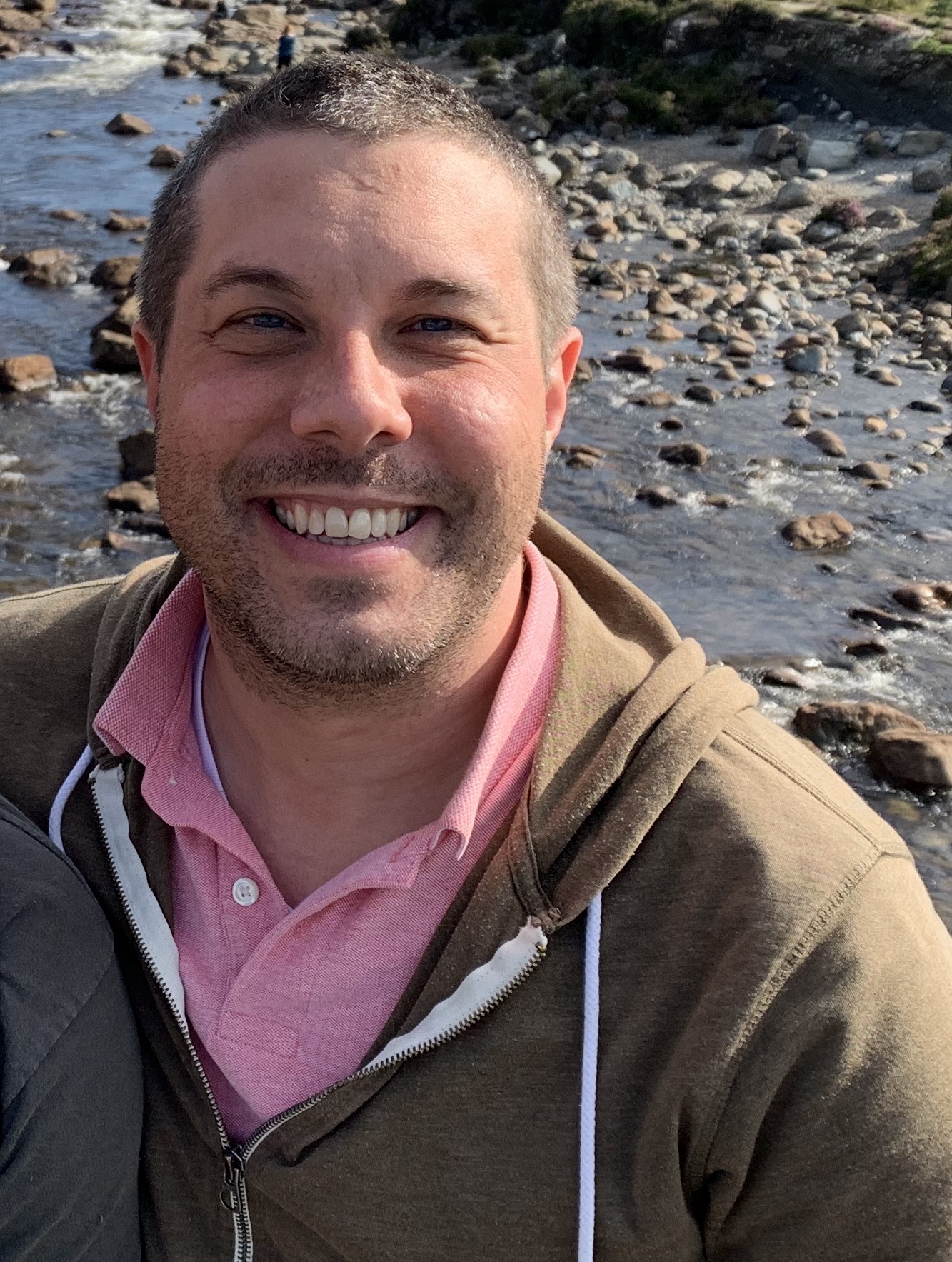
Poetry editor, WWPH Writes
|
|
|

|
|
Copyright © 2026 The Washington Writers' Publishing House, All rights reserved.
|
|
|
|
|